

Low Back or Neck Pain
A narrowing of the spinal canal may contribute to localized back or neck pain depending on the affected region.
Clinical Guide
Spinal stenosis involves the narrowing of the spinal canal or nerve openings. This can put pressure on the nerves, often causing pain, numbness, or weakness that travels into the legs, especially when standing or walking.
At SpinalAid Disc Center in Orlando, Dr. David Nahali, D.C. evaluates patients with spinal stenosis to determine whether their symptoms, examination findings, imaging findings, and clinical presentation support non-surgical spinal decompression.
Answer a few questions. If your case appears appropriate, you’ll be guided to the next step.
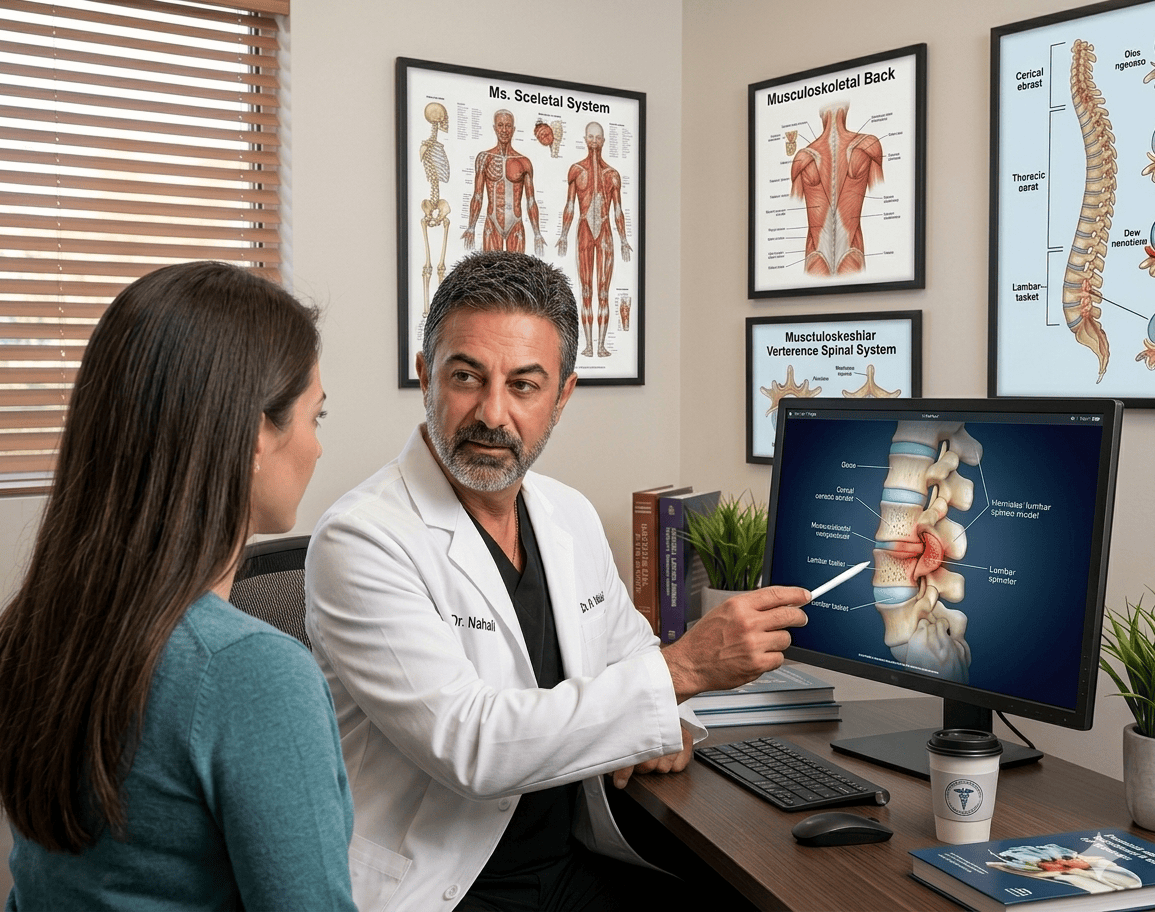
Spinal stenosis is a narrowing of the spaces within your spine, which can put pressure on the nerves that travel through the spine. It occurs most often in the lower back and the neck.
Not every case of spinal stenosis causes symptoms. Some narrowing is age-related and may not be the primary source of pain. That is why the clinical picture matters.
Clinical Signs
A narrowing of the spinal canal may contribute to localized back or neck pain depending on the affected region.
Pain, cramping, or heaviness in one or both legs, often worse during walking or standing for long periods.
Sensory symptoms in the legs or feet can suggest nerve pressure and should be reviewed carefully.
Symptoms that temporarily improve when sitting or leaning forward (like on a shopping cart) are a common pattern in lumbar stenosis.
Spinal stenosis can irritate nearby nerves when the available space is reduced. In selected cases, DRX9000 spinal decompression is intended to create controlled decompression forces around the evaluated spinal region.
That is why the pain pattern, neurological signs, and available imaging are reviewed together before decompression care is recommended.
Spinal decompression is not for everyone. Some cases of severe stenosis, progressive weakness, or instability require closer medical review or surgical evaluation. A focused evaluation helps determine whether decompression is reasonable for the specific case.
Start with the evaluation. It helps determine whether your symptoms may fit decompression care.
Start EvaluationResources
Helpful guides for patients comparing decompression, imaging, candidacy, and cost.
Information built to help patients ask better questions and make more informed decisions.