

Non-Surgical Spinal Decompression
for Herniated Discs & Sciatica
in Orlando
Back or leg pain may be related to a disc problem or nerve irritation. Find out if decompression may be appropriate.
Persistent back or leg pain may be related to a disc problem or nerve irritation. Find out whether non-surgical spinal decompression may be appropriate.
DRX9000 care evaluated by David Nahali, D.C.
DRX9000 care personally evaluated by David Nahali, D.C., with 26 years of clinical experience.
Request an EvaluationDo Any of These Symptoms Sound Familiar?
These patterns may be related to irritated spinal discs or nerve pressure. Learn why MRI findings matter before decompression care is considered. The next step is finding out whether your case fits a non-surgical approach.
Why Nothing Else Has Worked
When the real disc problem is missed, pain keeps coming back.
What Our Patients Say
Real experiences from patients who chose SpinalAid Disc Center for their care.
Keon
18 weeks ago
After being diagnosed with a disc herniation in my lower back, my primary doctor referred me to Dr. Nahali to try spinal decompression before looking at surgery. By that point, sit...
Joel Gonzalez
27 weeks ago
I've been dealing with back pain for over 10 years. I used to go to the chiropractor, which helped for a little while, but the pain always came back. I've tried just about everythi...
Patrycja Stys (Pats)
35 weeks ago
Dr. Nahali and Ms. Mari quite literally saved me from spinal surgery. I came in with herniated cervical and lumbar discs, a pinched nerve, and debilitating numbness in my hand. Phy...
Carlos Cretarolo
40 weeks ago
I took my 89 year old mom to Doctor David Nahali. He and her assistant Mary were so gentle with my mom . She is on a lot of pain , and they were so good to her. I was surprised wit...
Theresa Harrah
41 weeks ago
I just want to say that before I found Dr Nahali, no one has ever helped me as much as he has! I have had chronic lower back pain forever! I have herniated and bulging discs in my...
E S
May 5, 2025
I had a C-4/C-5, C-5/C-6 disc bulge that an ortho doctor told me I needed surgery for. I chose not to go that route. After doing do some extensive research and reviewing, I found D...
Janice Guttilla
Mar 24, 2025
When I first started to see Dr.Nahali, I was using a walker. After a few treatments I started using a cane. With the Dr's plan of treatments today I am not even using a cane to wal...
Kristopher Lewis
Sep 11, 2024
Dr. Nahali and Mari Vega is very nice people, they definitely treat you like family and not just a patient. Very patient, outgoing, understanding, helpful, they're everything you c...
Allen
Aug 14, 2024
I was a patient of Dr. David Natali, D.C., EE who treated my neck pain and low back pain at his clinic with non surgical Spinal Decompression treatment. The procedure worked great,...
Disc and Nerve-Related Problems We Evaluate
These are common disc and nerve-related patterns reviewed during a candidate evaluation.
Sciatica
Pain that travels from the lower back into the buttock, hip, leg, or foot may involve irritation of the sciatic nerve or related spinal structures.
Herniated or Bulging Disc
Disc changes can sometimes irritate nearby nerves and create recurring back pain, neck pain, numbness, tingling, or radiating symptoms.
Spinal Stenosis
Narrowing around the spinal canal or nerve openings may contribute to leg pain, walking limits, or posture-related symptoms.
Degenerative Disc Symptoms
Age-related or wear-related disc changes can sometimes create recurring pain patterns that need a focused clinical review.
Why the Evaluation Comes First
Back pain and sciatica can look similar from the outside, but the cause is not always the same.
That is why the evaluation comes first. The goal is not to place every patient into decompression care. The goal is to determine whether the problem appears disc-related, nerve-related, or better handled another way.
A focused evaluation helps determine whether you may be a candidate for non-surgical spinal decompression before a care plan is recommended.
Is Spinal Decompression Right for Every Back or Neck Pain Case?
Non-surgical spinal decompression may be considered for selected patients with disc-related back pain, neck pain, sciatica, or symptoms connected to herniated discs, bulging discs, spinal stenosis, or degenerative disc changes.
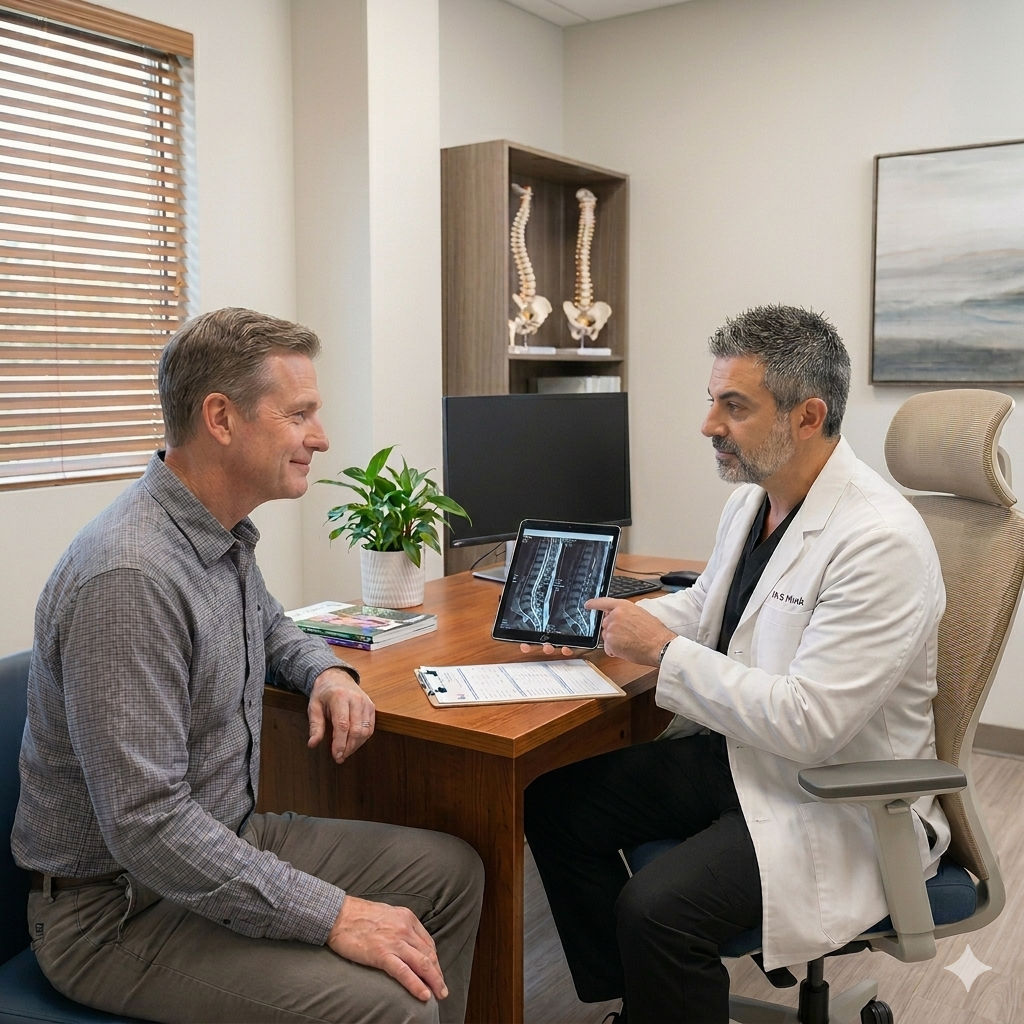
At SpinalAid Disc Center, the first step is a focused evaluation with Dr. David Nahali, D.C. to review your specific condition.
The goal is simple: determine whether you may be a candidate before recommending care.
How DRX9000 Decompression Fits Into the Process
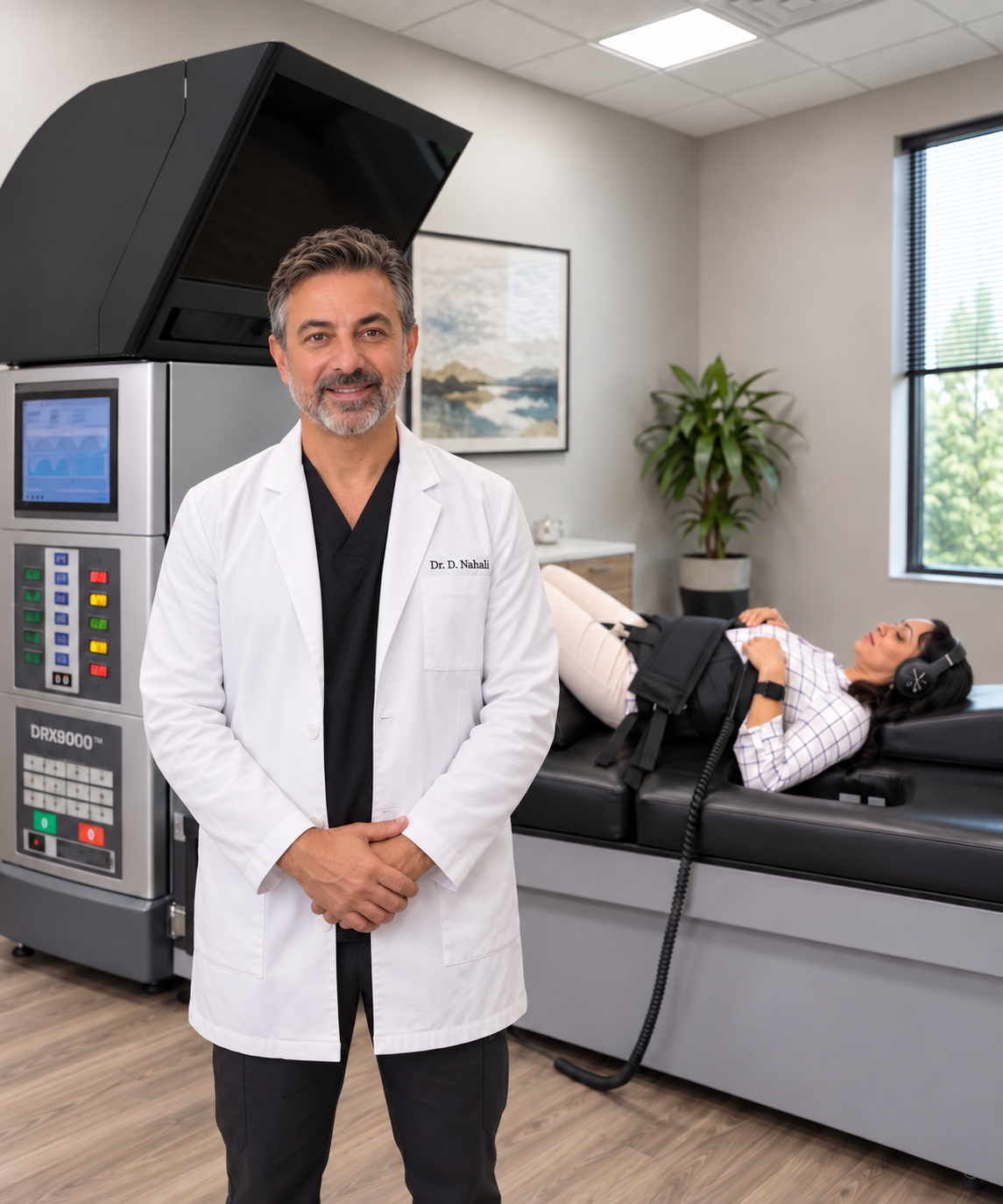
The DRX9000 is the spinal decompression technology used at SpinalAid Disc Center to deliver controlled, targeted decompression to specific areas of the spine.
Unlike traditional traction, the system uses computer-controlled tension and relaxation cycles designed to reduce pressure on affected discs and irritated nerves while keeping treatment comfortable and precise.
Each session is adjusted based on the spinal level being treated and the patient's individual treatment plan.
What Happens During the Candidate Evaluation
A focused visit helps determine whether your symptoms, history, and imaging support a non-surgical decompression approach.
Tell Us What You're Feeling
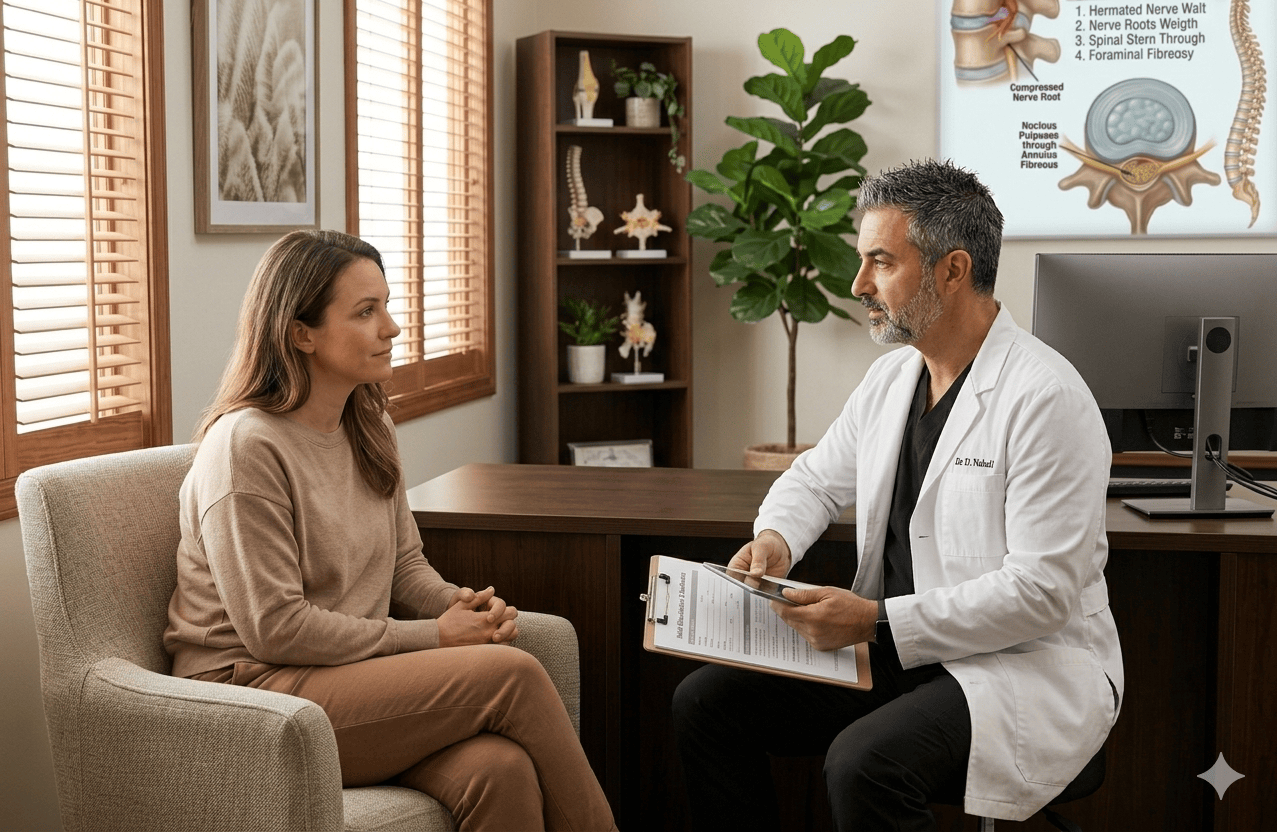
Your pain location, travel pattern, triggers, and prior care are reviewed.
Review the Clinical Picture
Dr. David Nahali, D.C. reviews your history and MRI findings when available or clinically appropriate.
Find Out If Your Case Fits
You receive guidance on whether your case appears appropriate for non-surgical spinal decompression or whether another direction may be needed.
Helpful Patient Guides
For patients comparing non-surgical spinal decompression options, these guides explain how candidacy, MRI review, cost, and specific disc-related conditions are evaluated.
DRX9000 Decompression Care
Learn how DRX9000 decompression care is reviewed for selected disc-related cases.
Candidate Evaluation
See how symptoms, history, exam findings, and imaging help determine whether decompression may be appropriate.
MRI Review
Understand why MRI findings matter when reviewing herniated discs, bulging discs, stenosis, and nerve compression.
Cost & Financing
Review how consultation cost, decompression care cost, and financing are discussed before treatment planning.
Herniated Disc Evaluation
Review common signs and evaluation factors for herniated disc-related neck or back pain.
Sciatica Evaluation
Learn how leg pain, numbness, tingling, and nerve-related symptoms are clinically reviewed.
DRX9000 vs Regular Traction
Understand how DRX9000 decompression differs from standard traction therapy.
Who Is Not a Candidate
Learn why decompression is not appropriate for every patient and what factors rule out candidacy.
Find Out If You May Be a Candidate
If disc-related back pain, sciatica, neck pain, or radiating symptoms keep coming back, the next step is a focused evaluation to determine whether you may be a candidate for non-surgical spinal decompression.