

Clinical Guide
Herniated and Bulging Disc Treatment in Orlando
A herniated or bulging disc can irritate nearby spinal structures or nerves, causing neck pain, back pain, numbness, tingling, or pain that travels into an arm, hip, leg, or foot.
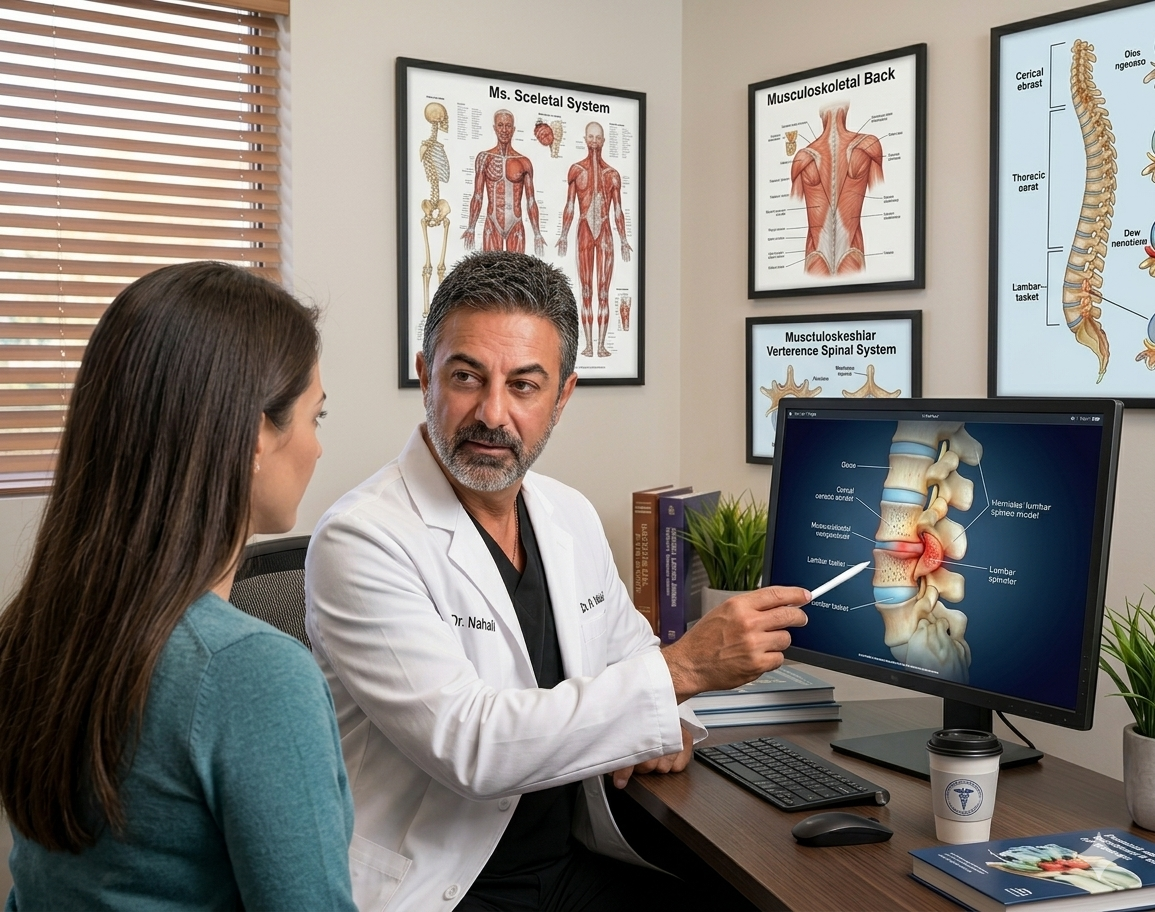
At SpinalAid Disc Center in Orlando, Dr. David Nahali, D.C. evaluates patients with herniated discs to determine whether their pain pattern, examination findings, imaging findings, and clinical presentation support non-surgical spinal decompression.
Clinically reviewed by David Nahali, D.C., with 26 years of clinical experience in conservative spine care.
Answer a few questions. If your case appears appropriate, you’ll be guided to the next step.
Can a Herniated Disc Be Treated Without Surgery?
Many people with a herniated disc can begin with non-surgical care, depending on their symptoms, neurological findings, and MRI results. For appropriate patients in Orlando, non-surgical spinal decompression may be considered for disc-related back or neck pain and radiating nerve symptoms. Dr. David Nahali evaluates each case to determine whether decompression is appropriate or whether another type of care is needed.
What Are Herniated and Bulging Discs?
A bulging disc occurs when the outer disc wall extends beyond its normal boundary while the inner material remains contained. A herniated disc occurs when inner disc material pushes through a weakened or damaged area of the outer wall. Either finding may be painless, or it may irritate nearby nerves and contribute to radiating symptoms. Treatment decisions should be based on whether the imaging findings match the patient’s symptoms and examination—not on the MRI wording alone.
Not every herniated disc causes symptoms. Some disc findings are mild or unrelated to the patient’s pain. That is why the clinical picture matters.
Clinical Signs
Symptoms That May Be Related to a Herniated Disc
Low Back or Neck Pain
A herniated disc may contribute to localized back or neck pain when the pain pattern matches the affected spinal region.
Radiating Arm or Leg Pain
Pain may travel into the arm, hand, hip, leg, or foot when nearby nerves are irritated.
Numbness or Tingling
Sensory symptoms can suggest nerve involvement and should be reviewed with exam findings and imaging when appropriate.
Weakness or Progressive Symptoms
Weakness, worsening symptoms, or changes in function may require careful evaluation and possible referral depending on severity.
Non-Surgical Treatment Options for Herniated and Bulging Discs
Many herniated disc cases are managed without surgery, depending on the patient’s symptoms, examination findings, imaging, and overall clinical picture.
Non-surgical care may include activity modification, therapeutic exercise or physical therapy, medications prescribed by an appropriate medical provider, and injections when clinically indicated.
For selected patients with disc-related pain or nerve irritation, non-surgical spinal decompression may also be considered. Dr. David Nahali, D.C. evaluates whether decompression fits the individual case rather than assuming every herniated disc should be treated the same way.
Patients with progressive weakness, severe neurological symptoms, or findings that require medical or surgical evaluation should be referred accordingly.
How Decompression Is Evaluated in Herniated Disc Cases
A herniated disc can irritate nearby nerves when disc material affects the spinal canal or nerve opening. In selected cases, DRX9000 spinal decompression is intended to create controlled decompression forces around the evaluated spinal region.
That is why the pain pattern, neurological signs, and available imaging are reviewed together before decompression care is recommended.
For appropriate cases, learn how DRX9000 spinal decompression works and how treatment levels are selected.
Safety Screening & Closer Review
Spinal decompression is not for everyone. Some cases require closer medical review or urgent attention, such as progressive weakness, severe neurological symptoms, or prior spine surgery. A focused evaluation helps determine whether decompression is reasonable for the specific case or whether another medical path is needed.
Not Sure If Decompression Is Right for Your Case?
Start with the evaluation. It helps determine whether your symptoms may fit decompression care.
Start EvaluationResources
Related Patient Guides
Helpful guides for patients comparing decompression, imaging, candidacy, and cost.
Information built to help patients ask better questions and make more informed decisions.