

Joint & Soft Tissue
- Arthritis or joint pain
- Bursitis
- Tendonitis
- Shoulder or rotator cuff irritation
- Knee pain
- Sprain or strain injuries
Low-level laser therapy, also called cold laser therapy, is a non-invasive treatment option that may be used to support soft tissue healing, inflammation control, and pain management in appropriate cases.
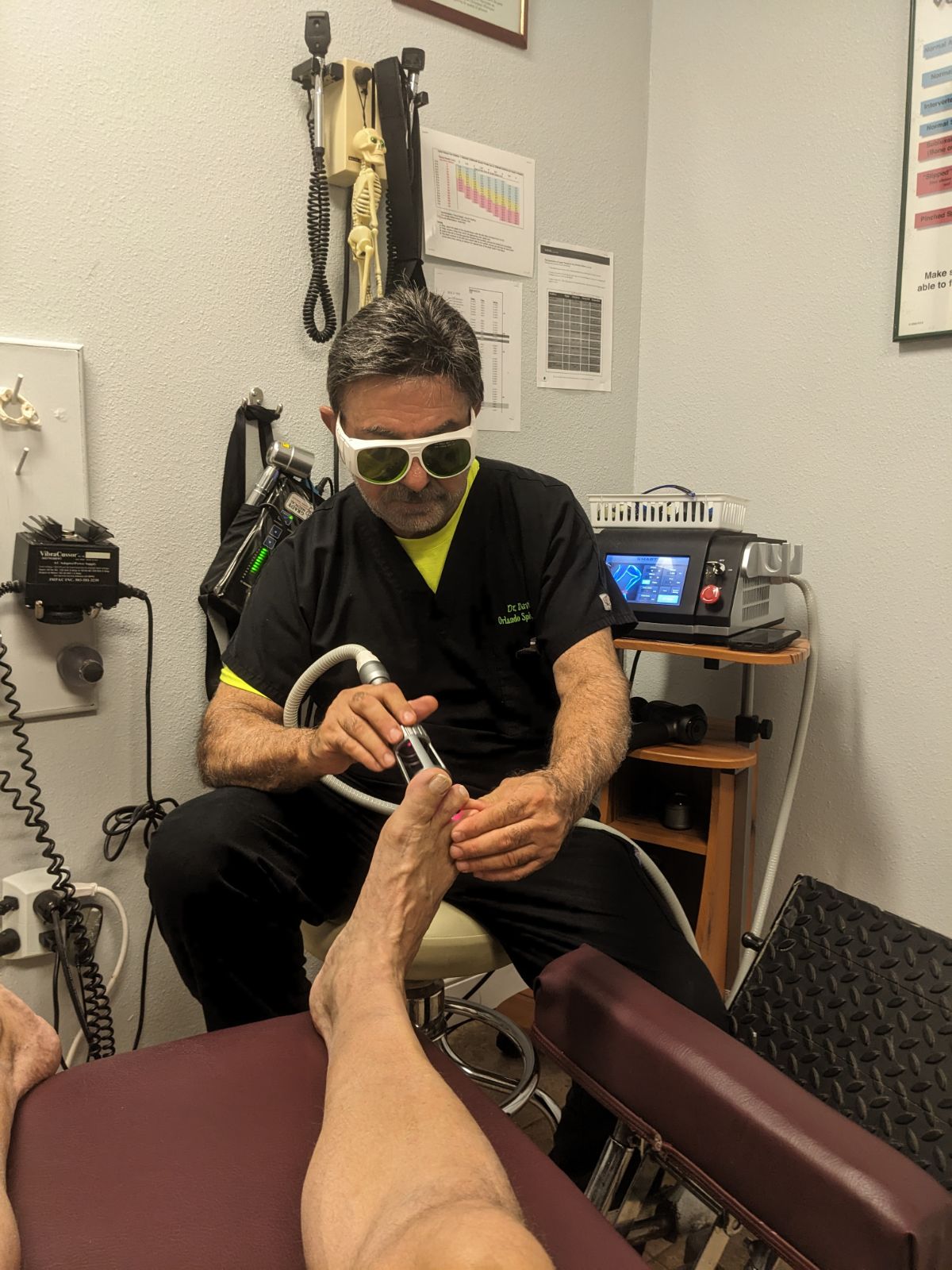
Cold laser therapy may be considered as part of a conservative care plan for certain musculoskeletal, joint, soft tissue, and nerve-related complaints after an appropriate evaluation.
Cold laser therapy is not recommended for every patient or every condition. The first step is determining whether the symptoms, history, and examination findings make it an appropriate option.
General educational video. Individual recommendations depend on evaluation findings.
Cold laser therapy uses specific wavelengths of low-level light applied to the treatment area. The goal is to support cellular activity involved in tissue repair, inflammation control, and pain modulation in appropriate cases.
Low-level light is applied over the area being evaluated or treated. The treatment does not involve cutting, injections, or medication.
Research on photobiomodulation suggests that certain wavelengths of light may influence cellular activity related to repair and inflammatory response.
Cold laser therapy is not used the same way for every patient. Recommendations depend on the condition, symptom pattern, examination findings, and clinical judgment.
Results vary. Cold laser therapy is not appropriate for every condition, and an evaluation is needed before treatment recommendations are made.
Different wavelengths of low-level laser light interact with tissue differently. In clinical use, wavelength, treatment area, tissue depth, and patient condition are all considered when deciding whether cold laser therapy is appropriate.
Some wavelengths are absorbed more superficially, while others may reach deeper tissue areas. The appropriate setting depends on the treatment goal and clinical judgment.
A shallow soft-tissue complaint may be approached differently than a deeper joint, muscle, or spine-related complaint.
Cold laser therapy should be selected and applied based on the patient’s symptoms, examination findings, and overall care plan.
Cold laser therapy is used in many conservative care settings as a non-invasive option for selected musculoskeletal, soft tissue, joint, and nerve-related complaints. At SpinalAid Disc Center, it is considered only after the patient’s symptoms, history, and examination findings are reviewed.
Cold laser therapy does not involve surgery, injections, or medication.
Treatment recommendations depend on the patient’s condition, clinical findings, and overall care plan.
When appropriate, cold laser therapy may be used alongside other conservative treatments.
Not every patient is a candidate, and results vary.