

Localized Back or Neck Pain
Recurring pain in the lower back or neck that may fluctuate in intensity over time.
Clinical Guide
Degenerative disc changes are a normal part of aging, but in some cases, they can contribute to recurring back pain, neck pain, or nerve irritation as the discs lose height and flexibility.
At SpinalAid Disc Center, degenerative disc cases are evaluated to determine whether the pain pattern, imaging findings, and clinical presentation support non-surgical spinal decompression.
Answer a few questions. If your case appears appropriate, you’ll be guided to the next step.
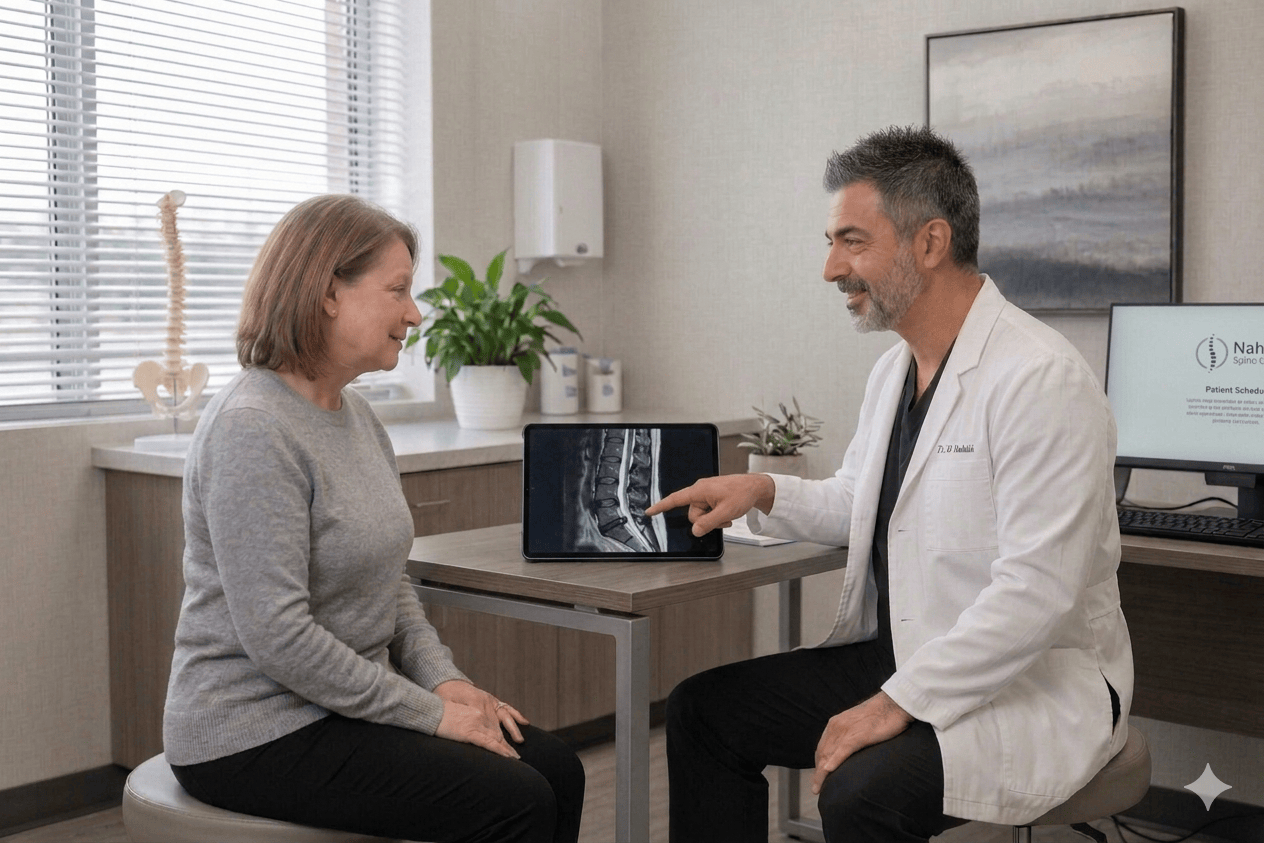
Degenerative disc changes occur when the spinal discs lose hydration, height, and flexibility over time. This can alter spinal mechanics and sometimes irritate nearby nerves or joints.
Not every degenerative disc causes pain. Many people have degenerative changes on an MRI with no symptoms. That is why the clinical picture matters.
Clinical Signs
Recurring pain in the lower back or neck that may fluctuate in intensity over time.
Pain that increases when sitting or staying in one position for long periods, as this can increase pressure on the discs.
Pain, numbness, or tingling that travels into the arms or legs if the disc changes lead to nerve irritation.
A feeling of stiffness or reduced flexibility in the spine, particularly in the morning or after periods of rest.
Degenerative disc changes can alter spinal mechanics and irritate nearby structures. In selected cases, DRX9000 spinal decompression is intended to create controlled decompression forces around the evaluated spinal region.
That is why the pain pattern, neurological signs, and available imaging are reviewed together before decompression care is recommended.
Spinal decompression is not for everyone. Some cases of severe degeneration, instability, or progressive symptoms require closer medical review. A focused evaluation helps determine whether decompression is reasonable for the specific case.
Start with the evaluation. It helps determine whether your symptoms may fit decompression care.
Start EvaluationResources
Helpful guides for patients comparing decompression, imaging, candidacy, and cost.
Information built to help patients ask better questions and make more informed decisions.